Use straight-blade snips for soft green stems, herbs and flowers, and bypass shears for woody stems up to about 3/4 inch, the thickness of a thumb. Cut about a quarter inch above a bud that faces outward, never leave a stub, and do most of your pruning in late winter, with spring bloomers done right after they flower.
Pruning looks like the simplest job in the garden. You see a stem you do not want and you cut it. But where you cut, what you cut with and when you do it decide whether the plant recovers in a week or carries a dead stub for a season. The good news is that a few rules cover almost every cut a home gardener makes with hand tools.
Our hand cutters come in two kinds, so this guide is partly about choosing between them. It also covers the part no tool can do for you: putting the blade in the right place. For that we lean on two university extension services, each linked with the date we read it.
Pruning is the intentional removal of parts of a plant for a purpose.
Keep that sentence in mind and half the decisions make themselves. Every cut should have a reason: a dead or broken stem, a branch rubbing on another, a shape you want to keep, a harvest. If you cannot name the reason, leave the stem alone.
Snips or bypass shears?
Snips for soft green stems a few millimeters thick, bypass shears for woody stems up to about 3/4 inch. Anything thicker needs loppers or a saw.
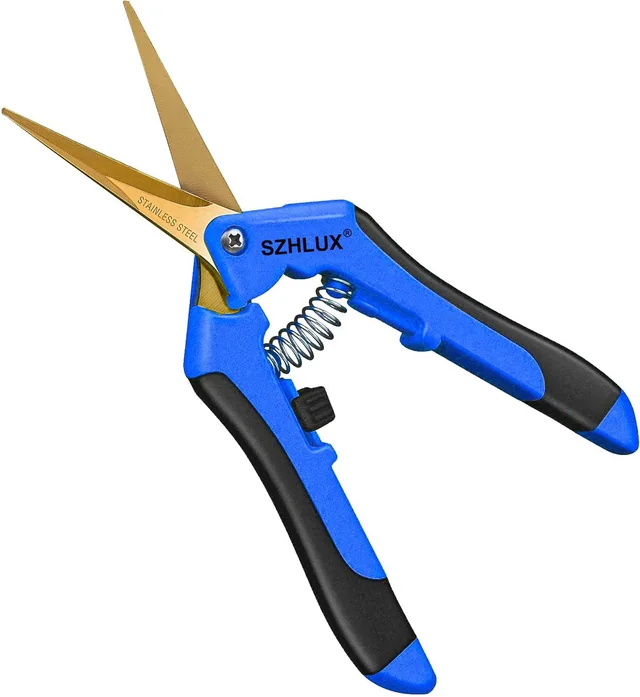
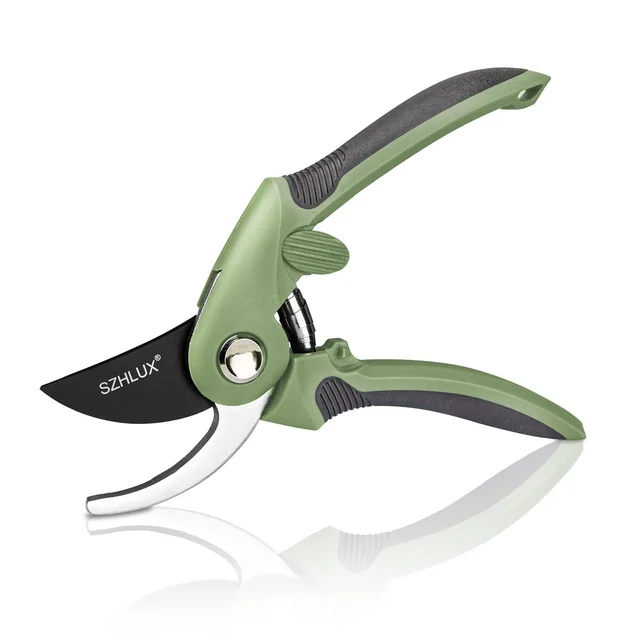
The two tools look alike and do different jobs. Garden snips have long, straight, narrow blades that cut right to the tip. They slip between crowded stems and take off exactly the leaf or flower you aim at. Bypass shears have a curved blade that slides past a hooked jaw, like a pair of scissors built for wood, and the curve pulls a woody stem into the cut instead of pushing it away.
So the stem decides. Soft and green, a few millimeters thick, and you want a precise cut in a tight spot: snips. Woody, brown and as thick as a pencil or more: bypass shears. Thicker than your thumb: neither. That job belongs to loppers or a pruning saw.
| Point | What you are cutting | The right hand tool | Our version |
|---|---|---|---|
| Herbs, cut flowers, house plants | Soft stems a few millimeters thick | Straight-blade snips | Gardening scissors, 6.5 in |
| Deadheading and shaping | Spent blooms and green shoots | Snips, or bypass shears for tougher stems | Either one |
| Roses and woody shrubs | Brown stems about 1/2 inch thick | Bypass shears | Bypass pruning shears, SK5 steel |
| Small branches | Up to about 3/4 inch, depending on the wood | Bypass shears | Bypass pruning shears |
| Branches thicker than a thumb | Over about 1 inch | Loppers or a pruning saw | Not one of ours |
The University of Minnesota sets the ceiling for hand shears clearly, and it matches what we tell people about our own.
A good pair of pruning shears is probably one of the most important tools. Cuts up to 3/4 inches in diameter may be made with them.
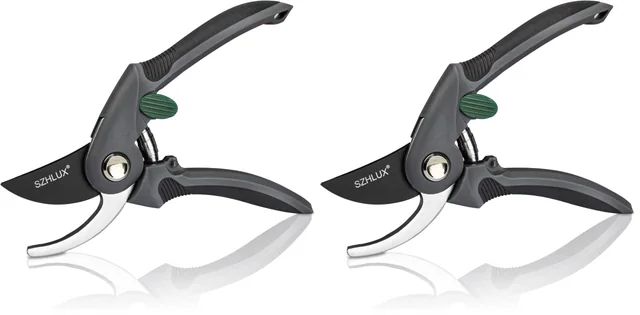
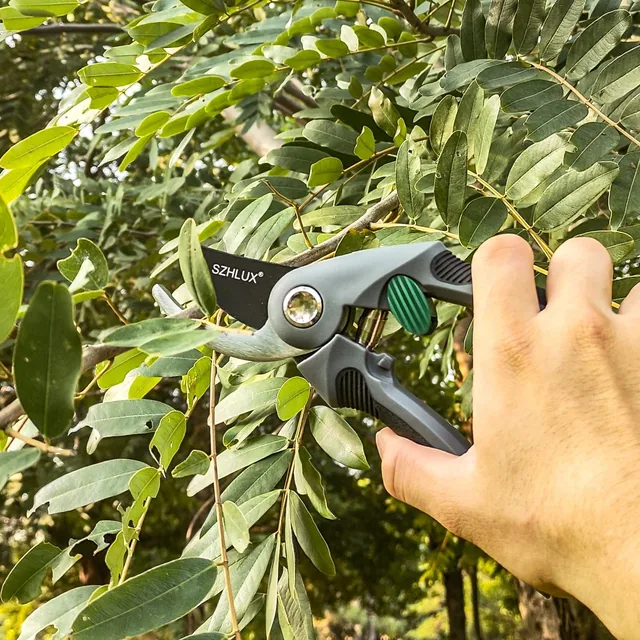
Our bypass shears are rated as 5/8 inch clippers and cut 1/2, 3/4 or 1 inch branches, depending on the wood. Soft wood like a fresh rose cane gives way easily, while dry, hard wood of the same size fights back. If you find yourself twisting the shears or squeezing with both hands, stop. The branch is too thick for this tool, and forcing it bruises the stem and springs the blades.
Our two hand cutters, one for soft stems and one for woody ones
Where to put the blade
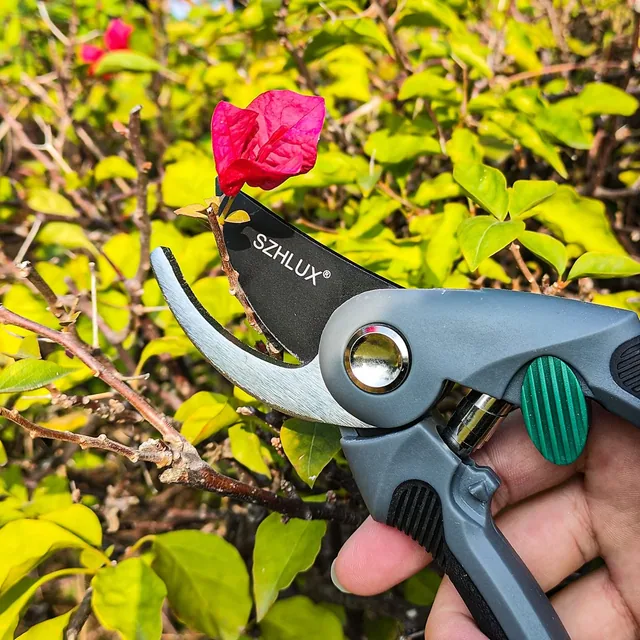
The spot matters more than the tool. A stem grows from its buds, the small bumps where leaves meet the stem, and new shoots come from the bud just below your cut. Cut too far above it and you leave a stub that dies back. Cut too close and you damage the bud itself. Minnesota gives the measurement.
To shorten a branch or twig, cut it back to a side branch or make the cut about 1/4 inch above the bud.
A quarter inch is about the width of a pencil eraser. Angle the cut gently so it slopes away from the bud, and rain runs off instead of pooling on it. Then pick the right bud, because the direction it points is the direction the new branch will grow.
Always prune above a bud facing the outside of a plant to force the new branch to grow in that direction.
That one habit keeps a shrub open in the middle, with light and air reaching the inner leaves, instead of a tangle of branches crossing each other. When you remove a whole branch rather than shortening it, cut just outside the slightly swollen ring where it joins a larger stem. That ring is the branch collar, and leaving it in place lets the wound seal.
When to prune
Timing is the rule people break most, usually because a plant looks untidy in midsummer. For most trees and shrubs, the best time is when they are bare.
The late dormant season (late winter to early spring) is best for most pruning.
In late winter you can see the shape of each branch without leaves in the way, and fresh cuts only sit open a short time before spring growth starts to seal them. There is one big exception. Shrubs that flower in early spring set their flower buds the summer before, so a late winter cut removes this year’s blooms.
Trees and shrubs that bloom early in the growing season on last year’s growth should be pruned immediately after they finish blooming:
Minnesota’s list after that line includes lilac, forsythia, azalea, magnolia and early spirea. Prune those right after the flowers fade. Shrubs that bloom later in summer, on the current year’s growth, can wait for late winter like everything else. Herbs and cut flowers are different again: you snip them whenever you harvest, and regular light snipping keeps many herbs bushy.
| Point | When to prune | Tool |
|---|---|---|
| Most trees and shrubs | Late winter to early spring, while dormant | Bypass shears for small branches |
| Spring-flowering shrubs | Right after the flowers fade | Bypass shears |
| Summer-flowering shrubs | Late winter, before new growth | Bypass shears |
| Herbs and cut flowers | Whenever you harvest | Snips |
| Dead, broken or diseased wood | Any time you see it | Whichever fits the stem |
Deadheading and harvesting with snips
Snips earn their place on the small jobs you do every week. Deadheading means cutting off flowers that have faded, before they set seed, and many annuals and perennials answer with a fresh round of blooms. Follow the faded flower’s stem down to the first full leaf or bud and cut just above it, so no bare stalk is left standing.
Herbs work the same way. Snip basil, mint and oregano just above a pair of leaves, and two new shoots grow where there was one. Take a little from many stems rather than a lot from one, and the plant stays bushy instead of tall and thin. Our 6.5 inch snips have straight blades that cut right to the tip, which lets you reach into a crowded pot without bruising the stems around your cut.
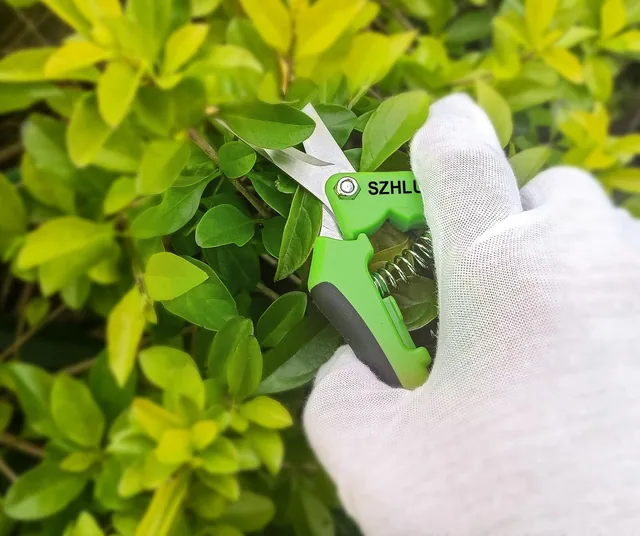
For cut flowers, snip in the cool of the morning, cut the stem at a slant and put it straight into water. The spring in the handles opens the blades after each cut, so a long session leaves your hand less tired.
How much to take off
Less than you think. A plant feeds itself through its leaves, and every cut removes part of its kitchen. Arizona’s extension slides put the ceiling at 25 to 30 percent of the canopy in any one year, and the lower end of that is the safer habit. If a shrub needs cutting hard every season to fit its spot, the spot is probably wrong for the plant, and moving it may save you hours.
For old, crowded shrubs, Minnesota describes renewal pruning: each year take out up to a third of the oldest, thickest stems right at the ground, and let new stems replace them. After three years the shrub is younger without ever being bare. Most of those stems are too thick for hand shears, so this is a job for loppers or a saw.
Four mistakes worth avoiding
The first is the stub. A cut halfway along a branch, far from any bud, leaves a length of wood with nothing to feed it. It dies back, turns gray, and gives rot an easy way in. Always cut back to a bud, a side branch or the branch collar.
The second is the flush cut, the opposite error. Cutting a branch off tight against the trunk removes the collar, and with it the tissue that seals the wound. Leave the slight swelling where the branch joins.
The third is shaping every shrub into a ball or a box. It looks neat for a week, then the plant pushes a dense shell of twigs with bare wood inside. Minnesota puts the advice plainly.
Avoid shearing shrubs into tight geometrical forms unless they need to be confined or trained for a specific purpose.
The fourth is pruning at the wrong time of year: cutting a lilac in March and wondering where the flowers went. Check when a shrub blooms before you reach for the shears, and when in doubt, wait until just after it flowers.
Clean, sharp and dry
A dull blade crushes a stem instead of slicing it, and a crushed stem recovers slowly. Keep both tools clean and sharp. Minnesota’s advice on tools is short and right.
Keeping tools well-maintained and sharp will improve their performance.
After each session, wipe the sap off the blades and let them dry before you put them away. We ask the same of everyone who owns our shears: wipe the blade and store it somewhere dry.
When you move between a sick plant and a healthy one, wipe the blades with rubbing alcohol. Arizona’s slides list 70 percent isopropyl alcohol for this. Close the lock before the tool goes into a pocket or a drawer, because both of our cutters have a lock that holds the blades shut. The shears have a loop of cord, so they can hang on a hook in the shed.
Both tools have a spring that opens the blades after each cut, which saves your hand on a long afternoon of deadheading. The shears are shaped for medium to large hands. If yours are small, the snips will feel better for light work.
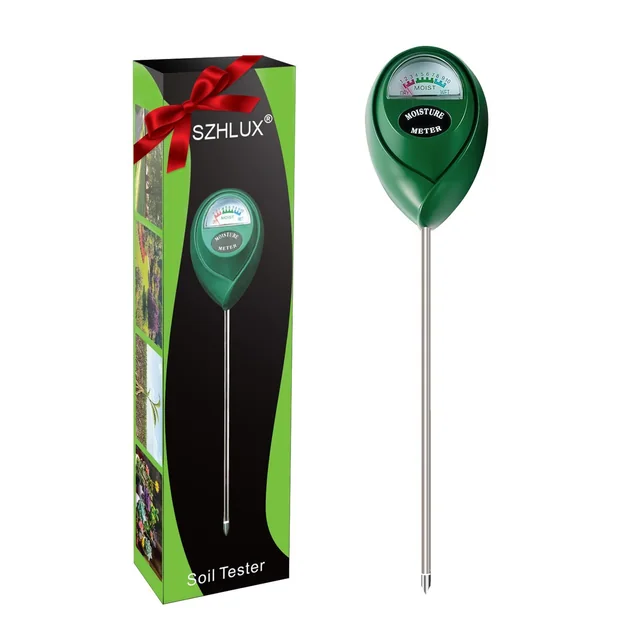
A spare pair for a second gardener, and a meter to check the soil before you water
After you cut
Pruned plants push new growth, and new growth needs water. Before you reach for the hose, push a moisture meter into the root zone and read the dial. It needs no battery, and the single probe disturbs few roots. Water when the soil reads dry, not on a schedule, and you avoid the soggy pots that stress a freshly pruned plant more than the cuts do.
Most cuts need nothing else. Minnesota notes that wound dressing is not normally needed on pruning cuts, so skip the paint and let the plant seal its own wounds.
What our cutters will not do
Snips will not cut woody stems, and trying will dull them fast. Bypass shears will not take a branch thicker than about an inch, and in hard wood they stop well before that. Neither tool replaces loppers for overgrown shrubs or a saw for tree limbs. And no tool fixes a cut in the wrong place, so take a second to find the bud before you squeeze.
You can see both cutters, the multi-packs, the moisture meter and the rest of our garden range in garden and yard.
Sources
- University of Minnesota Extension. Pruning trees and shrubs. Read 27 October 2026.
- University of Arizona, School of Plant Sciences. Pruning Trees and Shrubs. Read 27 October 2026.